 By Brian Jacques
 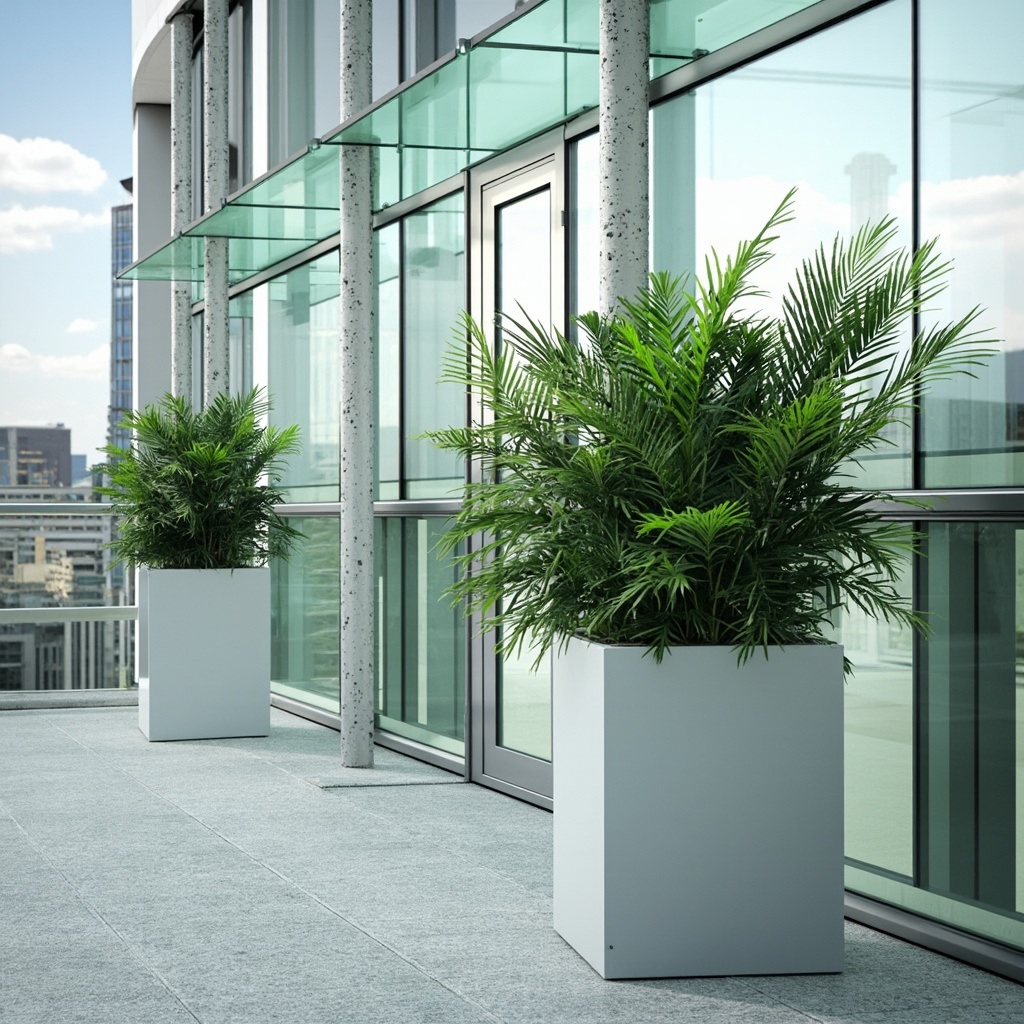 Let’s be honest: nobody installs a massive Aluminum Alloy Planter Box on the 40th floor hoping it becomes a projectile. But wind doesn’t care about your landscaping vision. It treats that beautiful, tall planter like a sail. And if you haven’t done the math—specifically the wind stability calculations—you’re not designing a garden. You’re engineering a hazard.
Here’s the brutal truth: most standard planters fail the moment the wind hits 50 mph. That’s not hurricane force. That’s a breezy Tuesday in Chicago. The problem isn’t the weight of the soil. It’s the leverage. A tall, slender planter acts like a lever arm. Wind pushes the top, and the base tries to pivot. If the center of gravity isn’t low enough, or if the base isn’t wide enough, that planter is going for a ride.
So what makes a tall aluminum planter safe on a high-rise deck? It’s not just about filling it with dirt. It’s about geometry, material density, and aerodynamic reality.
First, look at the base-to-height ratio. A planter that’s 36 inches tall needs a base that’s at least 18 inches wide. Anything narrower, and you’re fighting physics with hope. That’s a losing battle. The best designs taper outward at the bottom, creating a stable footprint without looking like a concrete block.
Second, the material matters more than you think. Aluminum is lightweight—that’s why we use it. But lightweight also means less inherent stability. The trick is in the wall thickness and the internal bracing. Cheap, thin-gauge aluminum planters flex under load. That flex transfers energy into the soil, which then shifts. Shifting soil changes the center of gravity. Now your planter is unstable even before the wind hits. Premium aluminum planters use reinforced corners and a heavier gauge at the base. They don’t wobble. They hold.
Third, wind tunnel data isn’t just for skyscrapers. It’s for planters. Seriously. The best manufacturers test their tall designs in wind tunnels. They measure drag coefficients. They simulate gust loads. They find out exactly how much wind it takes to tip a fully saturated planter. And then they design for 30% above that threshold. That’s the difference between a product that looks good in a catalog and one that survives a storm.
Now, let’s talk about the soil itself. Wet soil is heavy. That’s good for stability. But wet soil also compacts and drains differently. If your planter doesn’t have proper drainage and aeration, the soil becomes a soggy brick. That brick adds weight, but it also adds unpredictability. A well-designed planter uses a false bottom or a drainage reservoir to keep the soil structure intact. That way, the weight distribution stays consistent.
And here’s the kicker: the wind doesn’t blow straight. It swirls. On high-rise decks, wind accelerates between buildings. It creates vortices. A tall planter in a corner can experience forces 50% higher than a planter in the open. That’s why placement matters. But you can’t control where your client puts the planter. You can only control the product’s ability to handle worst-case scenarios.
So what’s the takeaway? Don’t buy tall aluminum planters based on looks alone. Ask for the wind stability calculations. Ask for the tip-over test results. Ask how the base is weighted. If the manufacturer can’t give you numbers, they’re selling decoration, not engineering.
The best tall planters aren’t just containers. They’re wind-resistant structures disguised as garden features. They use low centers of gravity, wide bases, reinforced aluminum, and tested aerodynamics. They look elegant, but they’re built like anchors.
Because on a high-rise deck, the view isn’t the only thing that takes your breath away. The wind will too. Make sure your planters can handle it.